
The Policy Brief of the Jesse M. Robredo Institute of Governance is a peer reviewed and Open Acess policy-oriented document that discusses various governance and development issues, present summary and findings of relevant research, provide analysis, and recommend possible courses of action and/or policy alternatives. It presents concise information that can help readers understand, and possibly make decisions about public policy issues or challenges. The Policy Brief covers various social, economic, political, and development issues and is generally written for public policy decision-makers, civil society organizations, think tanks, and governance and development academics, researchers and practitioners.
Each issue of the Policy Brief addresses one single governance or development issue. It is written in a short format of between 2,000 to 4,000 words. Regular issues of the Policy Brief are published quarterly, but special issues may be published outside of the regular schedule. To address the various governance challenges surrounding the COVID-19 pandemic, the Policy Brief will be published on a rolling basis.
EDITORIAL BOARD
The Editorial Board assesses submissions for suitability, decides on editorial policy, sets the direction, recommends reviewers, and vets submissions to the Policy Brief of the Jesse M. Robredo Institute of Governance within their area of expertise. It is an international and collegial body composed of a diverse group of scholars and practitioners from various disciplines with experience and expertise in various areas of development and governance.
Editor
John Benedict Felices
Editorial Staff
Mary Antonie Joan Alberto
John Matthew Virata
Shaira Mari Guiyab
SUBMISSION GUIDELINES
Submissions for the Policy briefs undergo desk review by the editorial staff and a double-blind peer-review process. All submissions for the Policy Brief should follow the format below and be between 2,000 to 4,000 words in length, excluding the references and the appendices. All accepted policy briefs will be published online with corresponding Volume and Issue numbers and International Standard Serial Number (ISSN). Manuscripts should be submitted to lsig@dlsu.edu.ph with the subject header Policy Brief Submission: <Short Title of the Policy Brief>.
Disclaimer: Authors are responsible for addressing all copyright and ownership issues with regard to the text, figures, data, and all other information used in their manuscript.
A good title quickly communicates the contents of the brief in a memorable way.
Title
Executive Summary
This provides a concise summary of the policy brief. It should include a brief overview of the problem, the most important conclusions, and key policy recommendations. This should be kept within 400 words or less. Authors should write this with the view that busy policy-decision makers may only have time to read the executive summary.
Background
This section lays down the policy issue or challenge, provides enough information to situate the issue in a broader context, and conveys the necessity of policy action
Main Text
This provides a brief evidence-based analysis of the issue and exploration of the policy options or alternatives available. This should be written objectively and in a manner that will enable the reader to see the important considerations that should be considered. Supporting evidence including tables, graphs, and figures may be supplied here. In the end, it should offer sound evidence and/or argumentation that could help the reader weigh which among the available policy options or alternatives should be considered.
Conclusion and Policy Recommendations
This section should provide a conclusion based on the available evidence and arguments on which among the available policy options or alternatives should be strongly considered or pursued. It should also offer recommendations on how to ensure that the objectives of policy intervention will be effectively met.
References
This provides a list of the reference materials used in the policy brief. It should also include an entry about the full study or studies that served as the basis for the policy brief. It should be arranged alphabetically and following the American Psychological Association (APA) Style Guide 7th edition.
Appendices
This is an optional section that may contain important supplementary information, tables, figures, or data that was not included in the main text but can help the reader better appreciate the issues and understand the analysis more deeply.
LATEST ISSUES
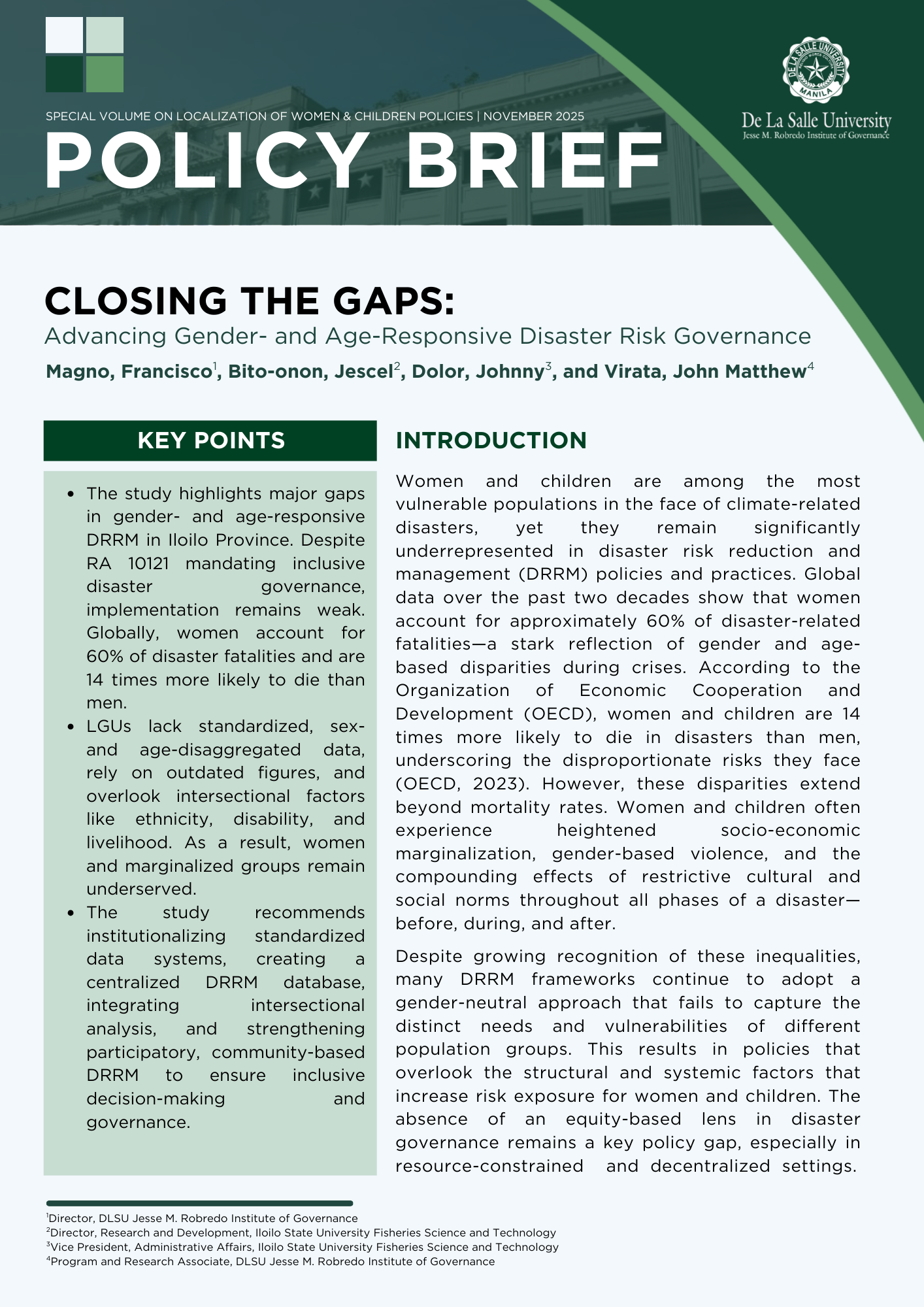
Closing the Gaps: Advancing Gender- and Age-Responsive Disaster Risk Governance
(POLICY BRIEF SPECIAL ISSUE ON WOMEN AND CHILDREN)
-
This study examines the persistent gaps in gender- and age-responsive disaster risk reduction and management (DRRM) in the Philippines, with a focus on Iloilo Province. Despite a robust national policy framework, including Republic Act (RA) No. 10121 or the National Disaster Risk Reduction and Management Act of 2010, which mandates inclusive and participatory disaster governance, implementation at the local level remains weak. In particular, local government units (LGUs) struggle to systematically collect and utilize sex- and age-disaggregated data, hindering accurate risk assessments and the development of equitable disaster preparedness and response strategies.
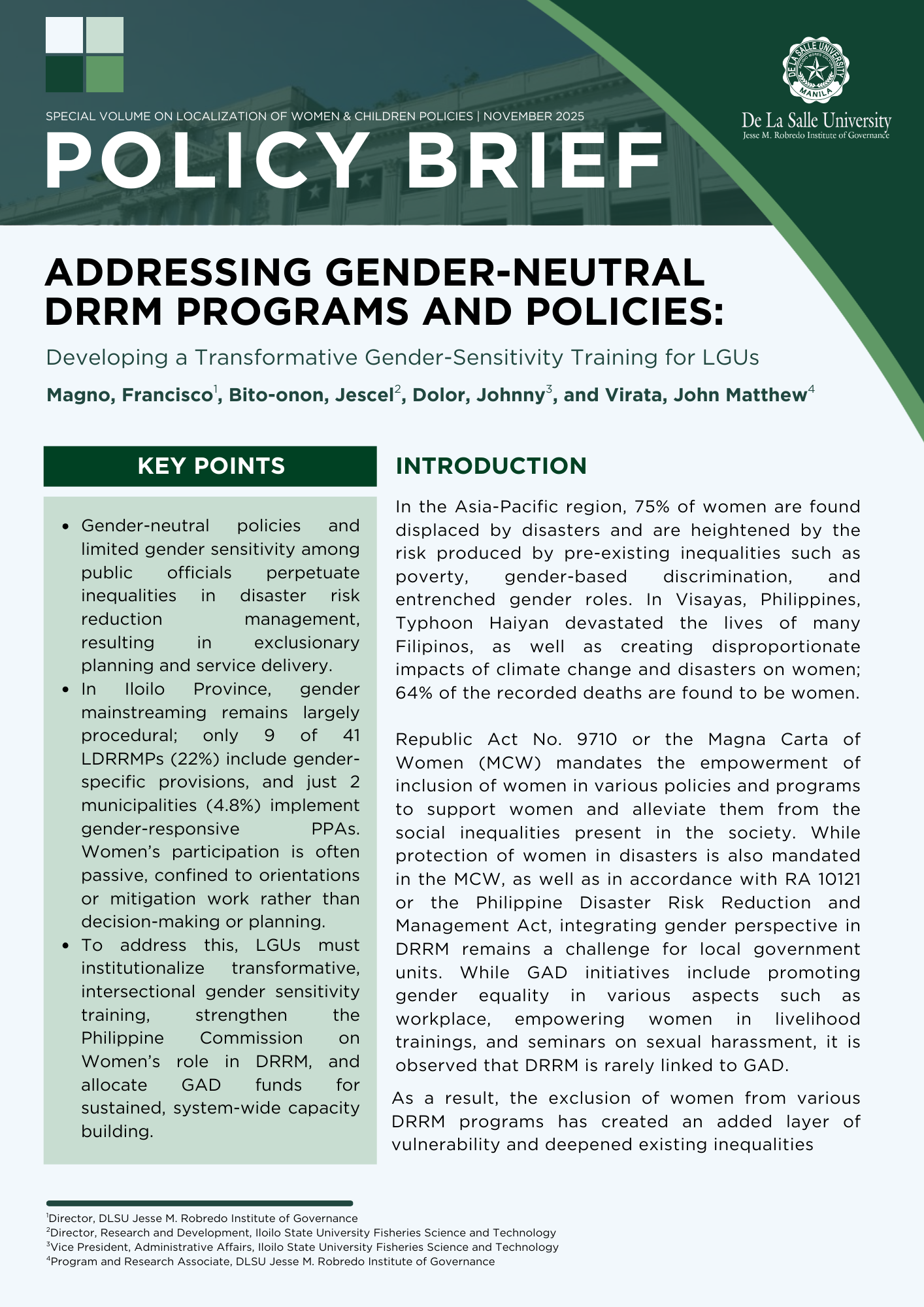
Addressing Gender-Neutral DRRM Programs and Policies: Developing a Transformative Gender-Sensitivity Training for LGUs
(POLICY BRIEF SPECIAL ISSUE ON WOMEN AND CHILDREN)
-
This brief calls for the establishment of transformative, locally grounded, and intersectional gender sensitivity training programs that transcend procedural compliance. As disasters increasingly expose and deepen existing social inequalities, it is imperative to develop transformative gender sensitivity training to build inclusive, responsive, and equitable DRRM systems. This paper recommends the design of context-specific gender sensitivity training modules, the institutionalization of such training at the local level, and the strategic positioning of the Philippine Commission on Women (PCW) as an integral contributor within the NDRRMC and its subcommittees. Additionally, it calls for the development of a comprehensive monitoring and evaluation system for gender-responsive DRRM programs, as well as the dedicated allocation of Gender and Development (GAD) funds to support sustained capacity-building efforts in this area.
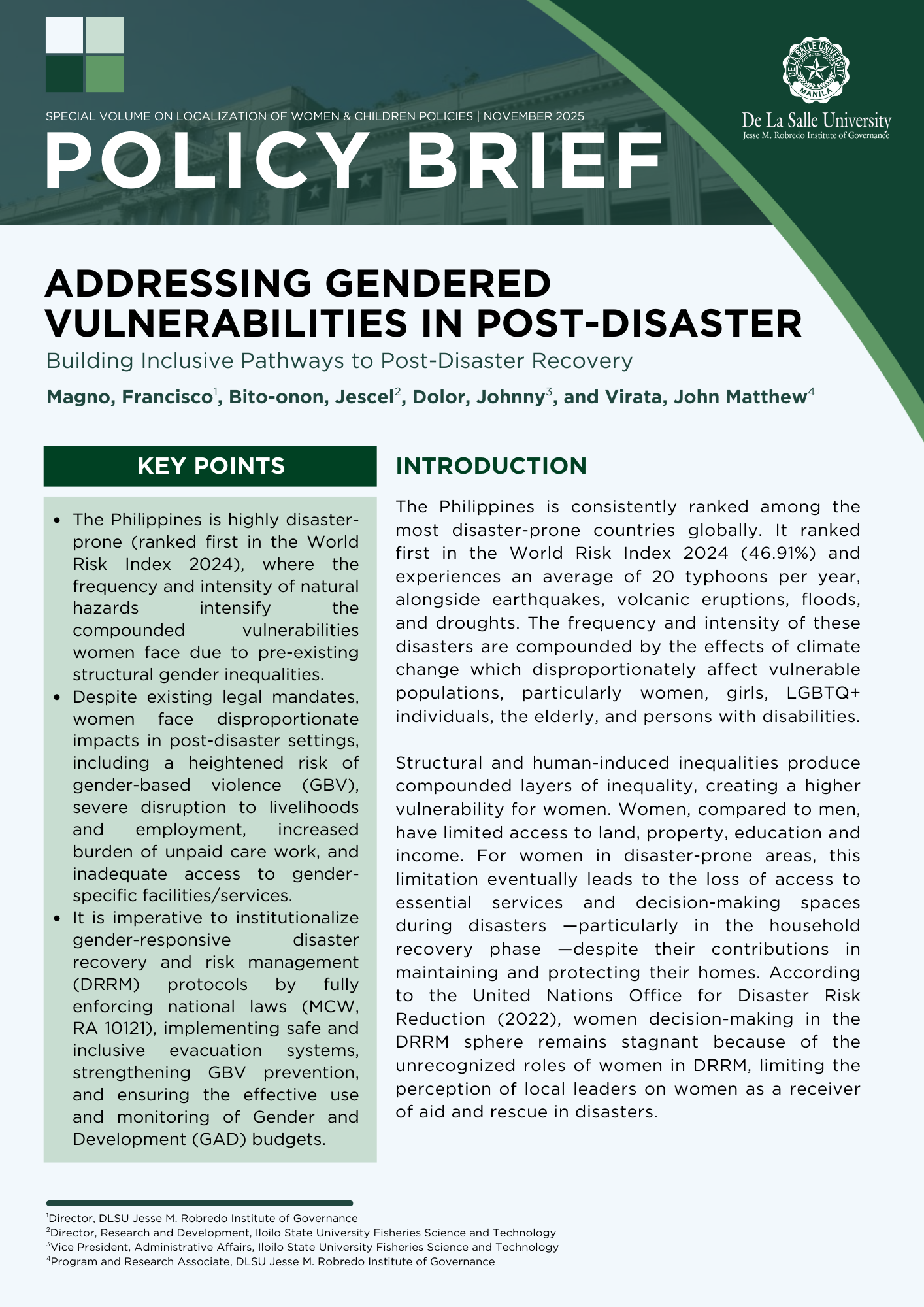
Addressing Gendered Vulnerabilities in Post-Disaster: BUILDING INCLUSIVE PATHWAYS TO POST-DISASTER RECOVERY
-
Data on disaster-related deaths, injuries, and other impacts consistently show that women are disproportionately affected by disasters. This disparity is further intensified by the compounded effects of pre-existing gender inequalities, which contribute to significantly worsened outcomes for women in post-disaster contexts. Key issues faced by women after disasters include unequal access to aid, inadequate protective mechanisms, heightened risks of gender-based violence and sexual harassment, and the loss of livelihood and employment opportunities. Findings reveal that despite the existence of laws, such as the Magna Carta of Women (MCW) and Republic Act No. 10121 or the Philippine Disaster Risk Reduction and Management (DRRM) Act of 2010 that explicitly mandate the inclusion and protection of women during disasters, the differentiated needs of women are often overlooked in practice. As a result, there remains a persistent gap between the legal frameworks and the actual delivery of post-disaster services and governance. To address the compounded vulnerabilities of women in post-disaster settings, this policy brief recommends institutionalizing gender-responsive recovery protocols, enforcing the gender provisions of the Magna Carta of Women and RA 10121, and ensuring safe, inclusive evacuation and relief systems. It also calls for targeted livelihood support for women, strengthened protection against gender-based violence, and regular gender sensitivity training for DRRM actors. Finally, it also emphasizes the need for effective use and monitoring of gender and development (GAD) budgets to ensure that post-disaster programs address women’s differentiated needs.
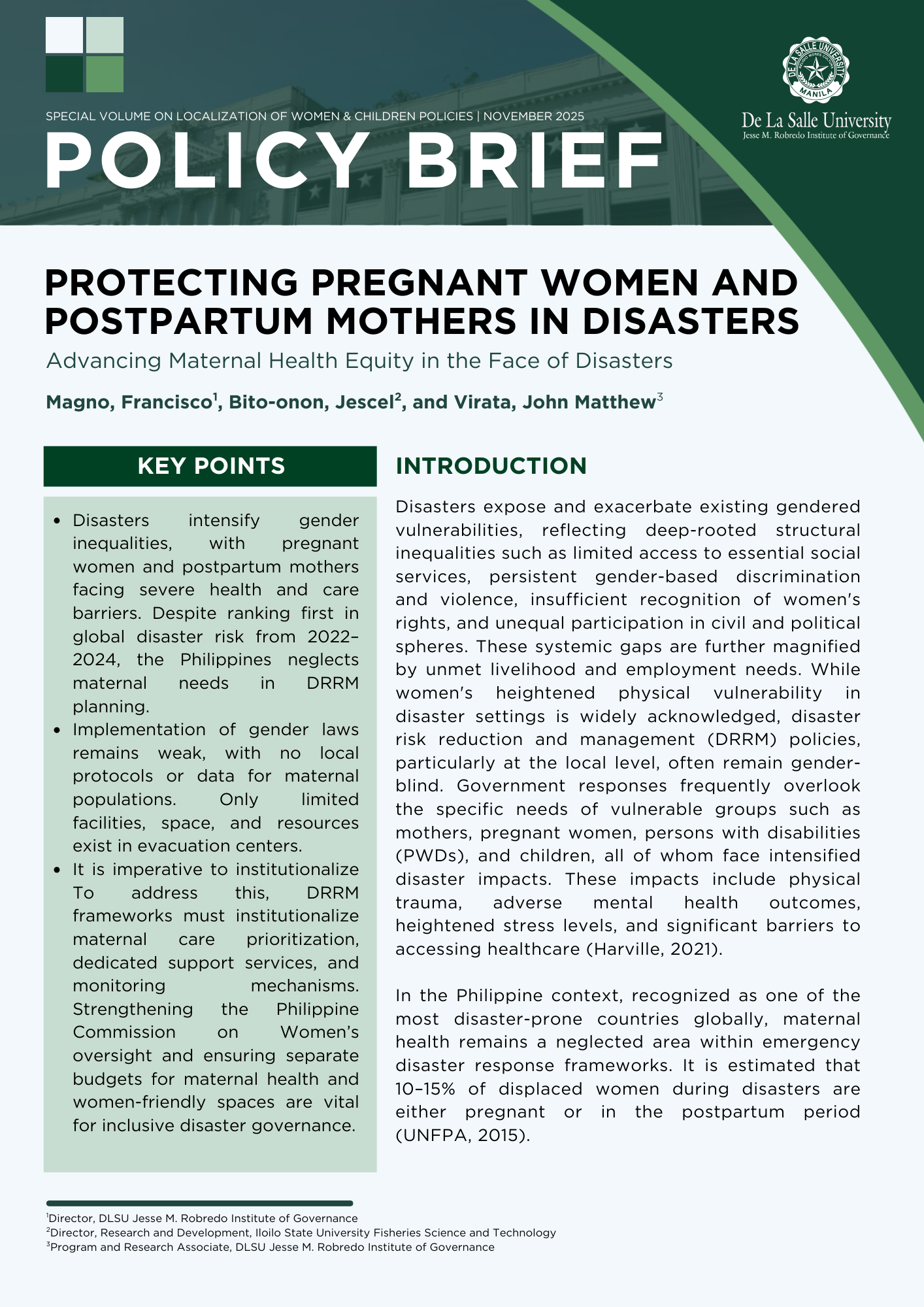
Protecting Pregnant Women and Postpartum Mothers in Disasters: Advancing maternal health equity in the face of disasters
-
Disasters intensify gender inequalities, with pregnant women and postpartum mothers facing severe health and care barriers. Despite ranking first in global disaster risk from 2022–2024, the Philippines neglects maternal needs in DRRM planning. Implementation of gender laws remains weak, with no local protocols or data for maternal populations. Only limited facilities, space, and resources exist in evacuation centers. To address this, DRRM frameworks must institutionalize maternal care prioritization, dedicated support services, and monitoring mechanisms. Strengthening the Philippine Commission on Women’s oversight and ensuring separate budgets for maternal health and women-friendly spaces are vital for inclusive disaster governance.
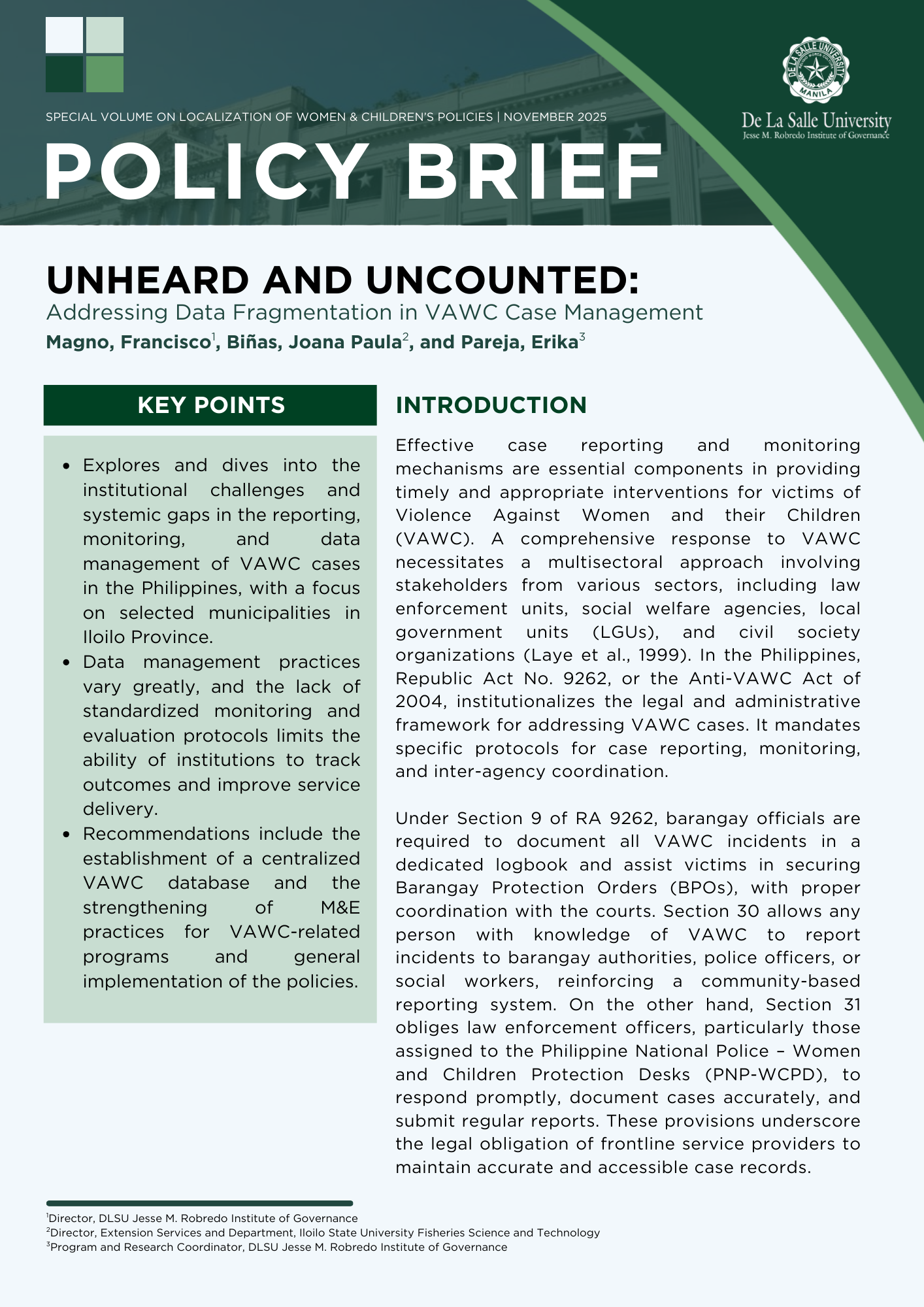
Unheard and Uncounted: Addressing Data Fragmentation in VAWC Case Management
(POLICY BRIEF SPECIAL ISSUE ON WOMEN AND CHILDREN)
-
This policy brief investigates the institutional challenges and systemic gaps in the reporting, monitoring, and data management of Violence Against Women and their Children (VAWC) cases in the Philippines, with a focus on selected municipalities in Iloilo Province. Despite the existence of Republic Act (RA) No. 9262, otherwise known as the Anti-VAWC Act of 2004, which provides a legal framework for protecting women and children from abuse, the study reveals that poor data coordination, fragmented reporting systems, and socio-cultural barriers continue to hinder the effective application of the law.
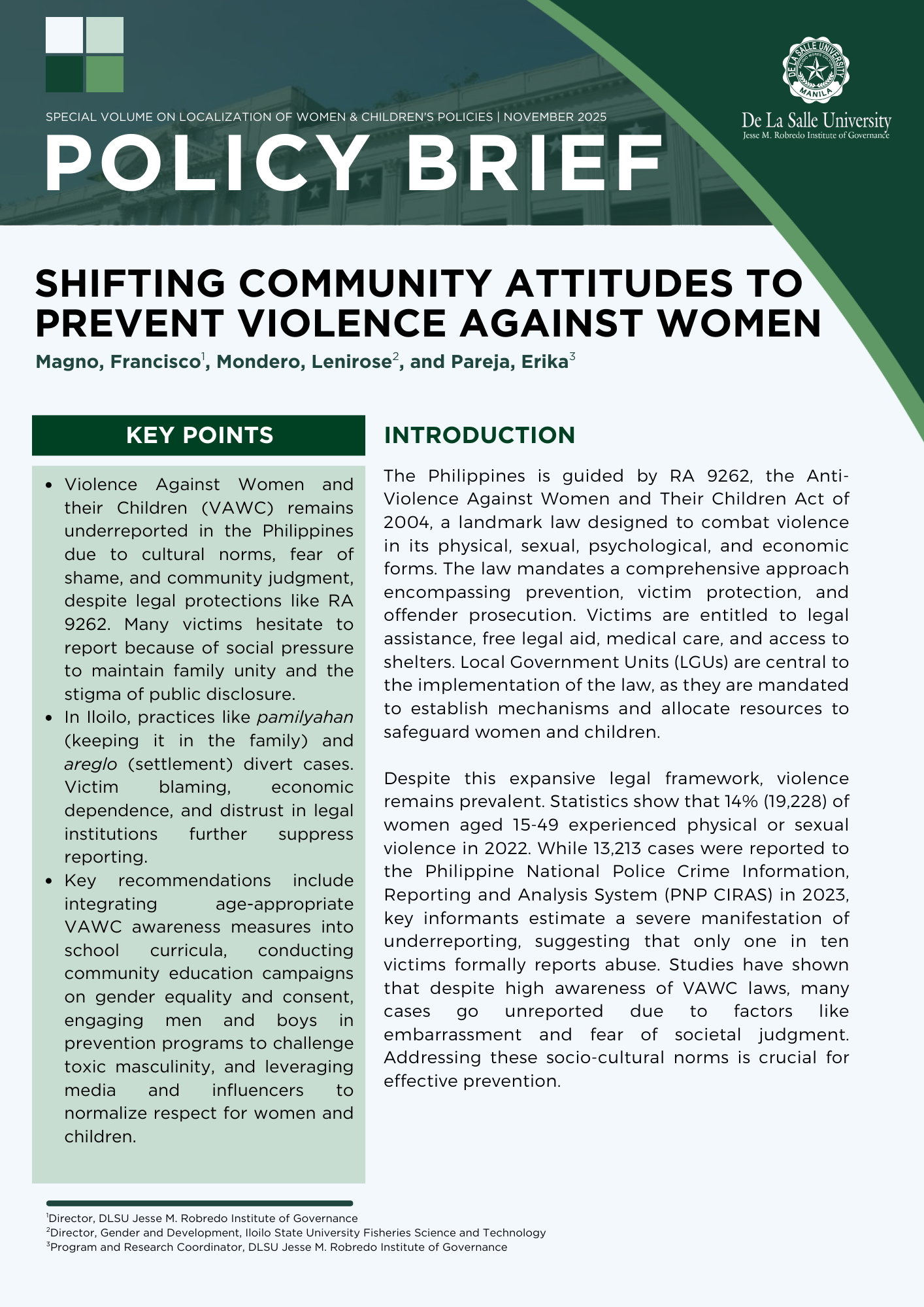
Shifting Community Attitudes to Prevent Violence Against Women
(SPECIAL POLICY BRIEF ON WOMEN AND CHILDREN)
-
This policy brief addresses the critical influence of deep-rooted cultural and societal norms on the prevalence and reporting of Violence Against Women and their Children (VAWC) in the Philippines. Despite the existence of the legal framework provided by Republic Act (RA) No. 9262 (Anti-VAWC Act of 2004), many cases remain unreported due to socio-cultural barriers such as fear, shame, and societal judgment.
Drawing on a qualitative study conducted in selected municipalities in Iloilo Province (Badiangan and San Dionisio), the findings reveal that community attitudes severely hinder help-seeking. Key barriers include the culture of pamilyahan (family-centered resolution) and areglo (informal settlement), widespread victim-blaming, and the prevalence of financial dependence on abusers. Victims often internalize shame and fear retaliation or community judgment (chismis). Furthermore, the lack of public awareness and distrust in the slow-moving justice system discourage formal reporting.
To effectively challenge these norms and foster long-term prevention, this brief recommends a holistic shift in the cultural zeitgeist. Key recommendations include integrating age-appropriate VAWC awareness measures into school curricula, conducting community education campaigns on gender equality and consent, engaging men and boys in prevention programs to challenge toxic masculinity, and leveraging media and influencers to normalize respect for women and children.
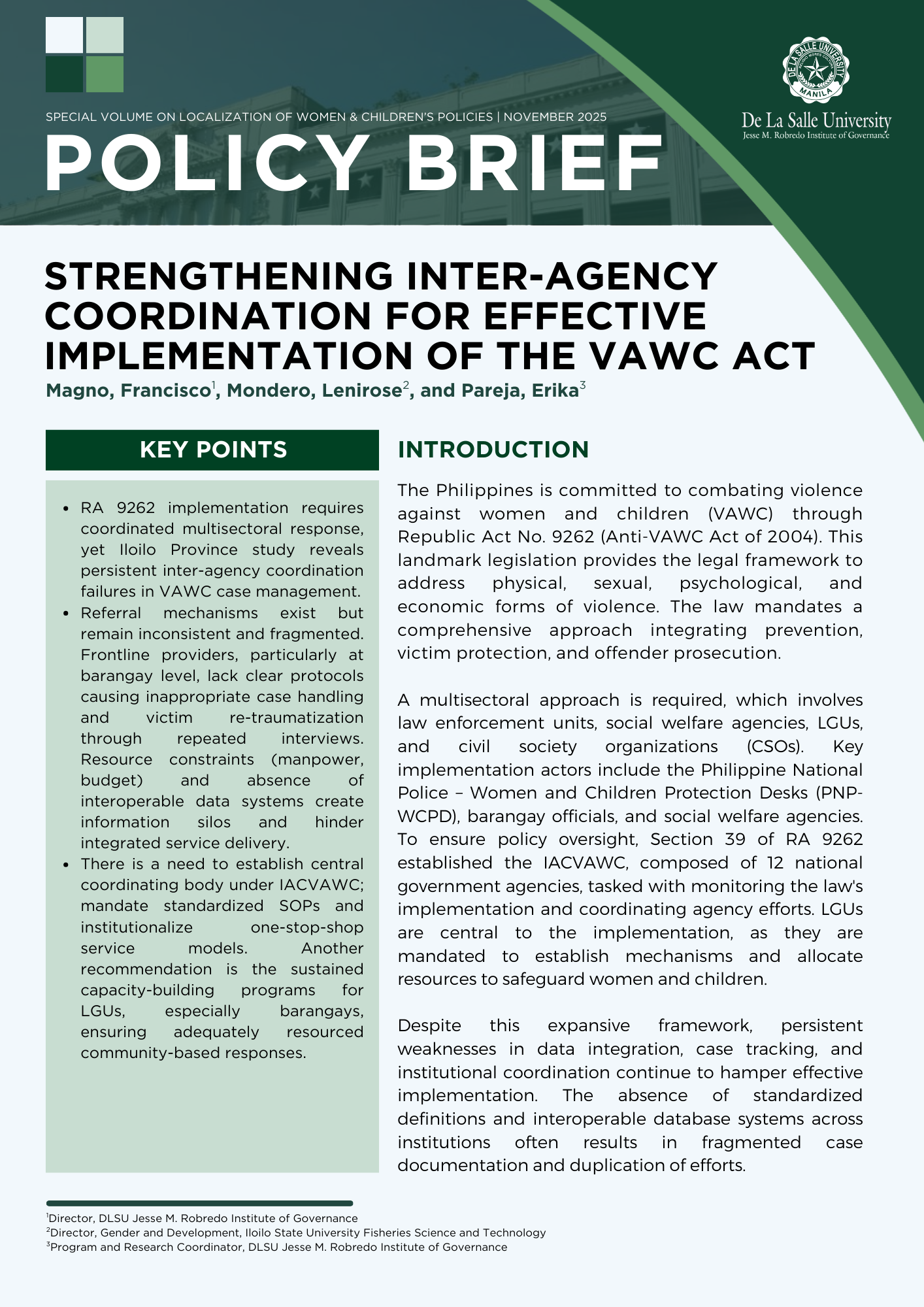
Strengthening Inter-Agency Coordination for Effective Implementation of the VAWC Act
-
Effective implementation of the Anti-Violence Against Women and their Children Act of 2004 (RA 9262) necessitates a coordinated, multisectoral response involving law enforcement, social services, health facilities, and local government units (LGUs). This policy brief examines the persistent challenges facing inter-agency coordination in VAWC case management, drawing on a qualitative study conducted in selected municipalities in Iloilo Province.
The study found that while referral mechanisms exist, implementation is inconsistent and services are fragmented. Key findings indicate a widespread lack of clear protocols and awareness among frontline service providers, especially at the barangay level, often leading to inappropriate case handling and re-traumatization of victims through repeated interviews across different agencies. Furthermore, coordination is inconsistent and resource constraints, such as insufficient manpower and budget, hinder integrated service delivery. These challenges are compounded by the absence of a harmonized, interoperable data system, resulting in information silos and fragmented case documentation.
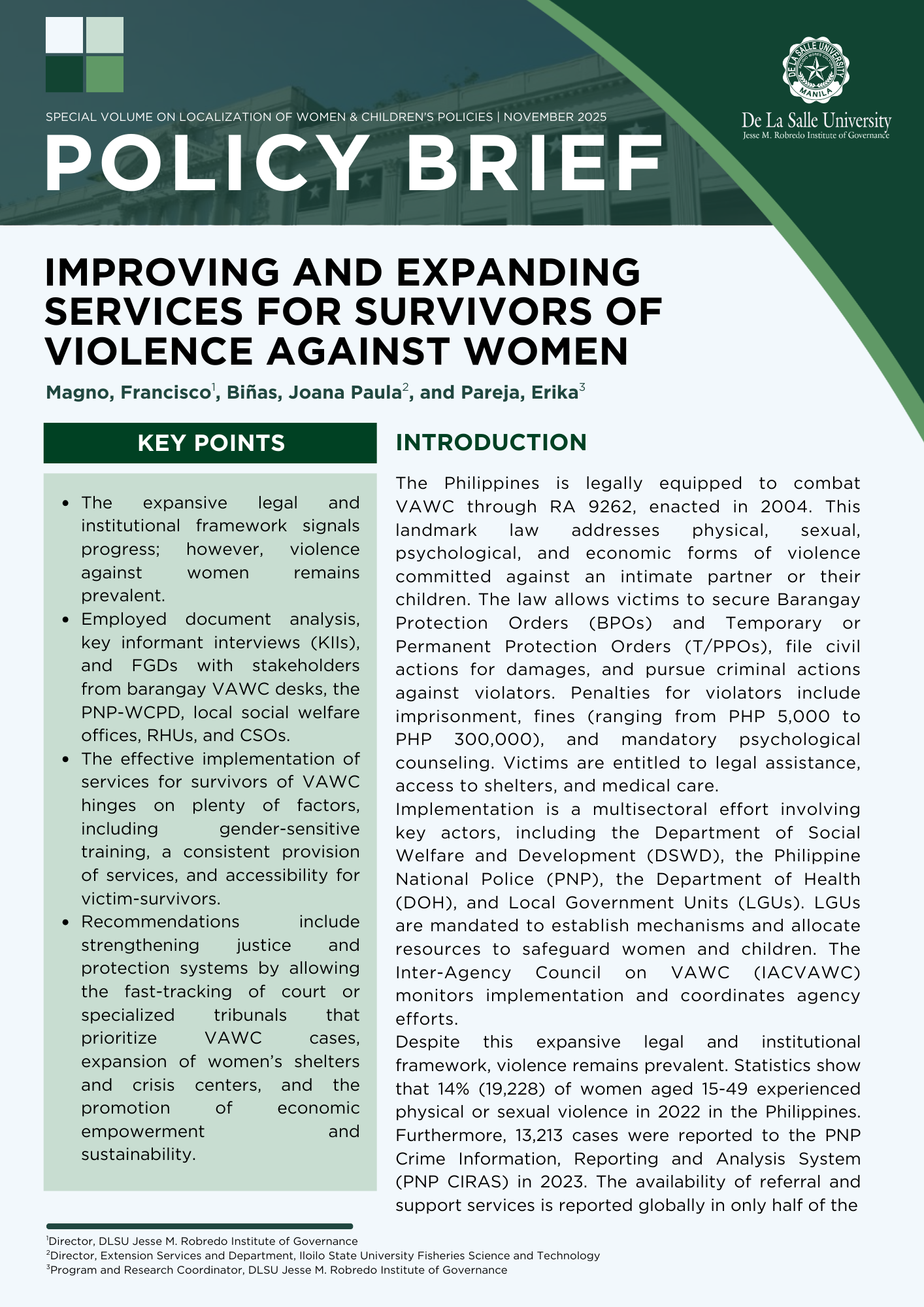
Improving and Expanding Services for Survivors of Violence Against Women
-
This policy brief examines the existing mechanisms and persistent challenges in providing comprehensive services for victim-survivors of Violence Against Women and their Children (VAWC) in the Philippines, focusing on selected municipalities in Iloilo Province. Despite the presence of Republic Act (RA) No. 9262, the Anti-VAWC Act of 2004, which mandates a comprehensive approach integrating prevention, victim protection, and offender prosecution, significant gaps in service delivery, accessibility, and implementation consistency remain, particularly at the local level.
Using a qualitative approach that included document analysis, Key Informant Interviews (KIIs), and Focus Group Discussions (FGDs) with frontline service providers and community stakeholders in Iloilo, the study highlights critical issues. Key findings indicate a severe lack of resources (budget and manpower), especially shortages of social workers and psychologists, hindering program implementation and service availability. Furthermore, while referral pathways exist, they suffer from accessibility issues for marginalized groups and inconsistent implementation due to inadequate training for service providers, often leading to case mishandling and the re-traumatization of victims through repeated interviews. Cultural norms like pamilyahan (family-centered resolution) and financial dependence on abusers also significantly deter victims from seeking help.
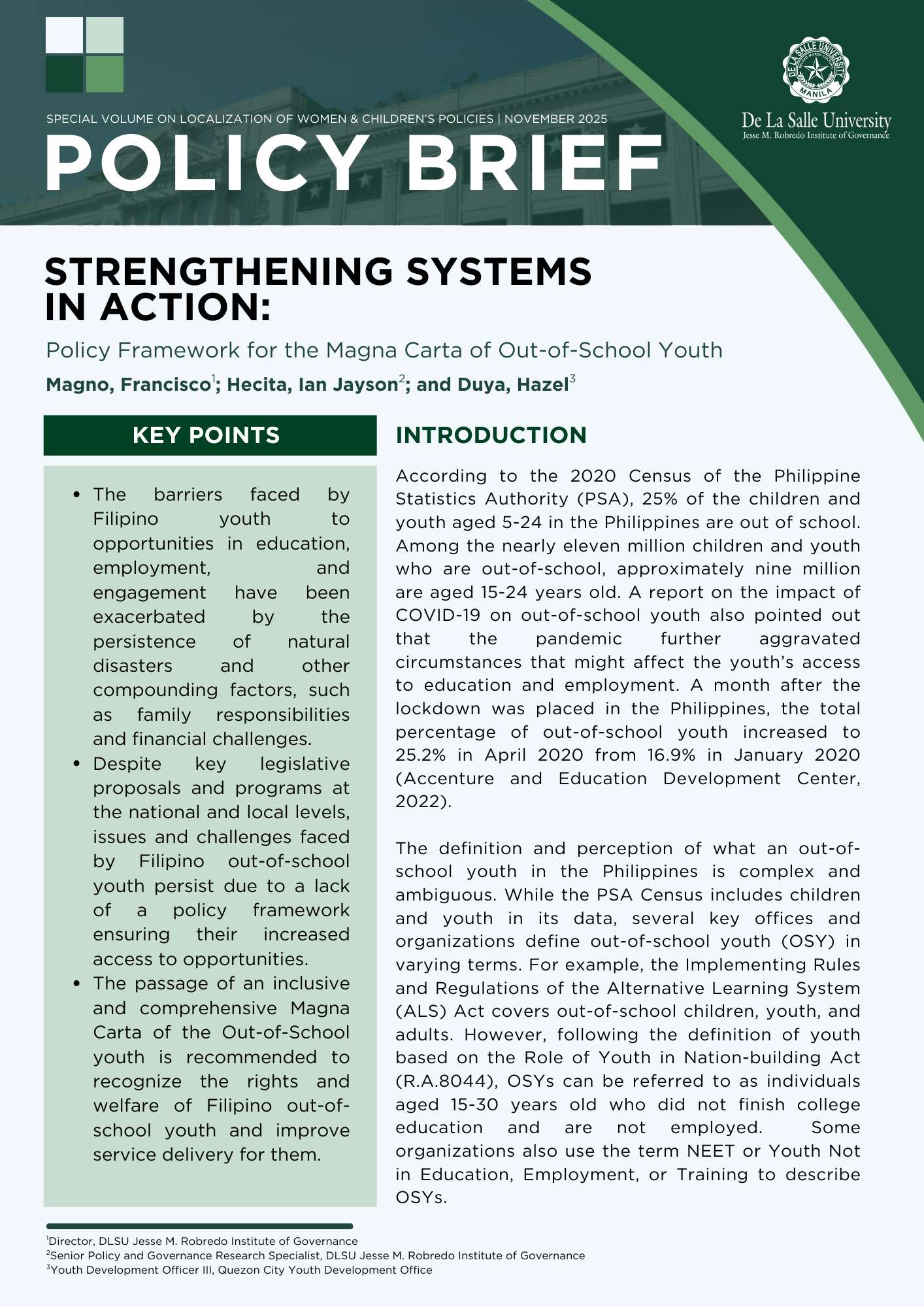
Strengthening Systems in Action: Policy Framework for the Magna Carta of Out-of-School Youth
(SPECIAL POLICY BRIEF ON WOMEN AND CHILDREN)
-
The barriers faced by Filipino youth to opportunities in education, employment, and engagement have been exacerbated by the persistence of natural disasters and other compounding factors, such as family responsibilities and financial challenges. Despite key legislative proposals and programs at the national and local levels, issues and challenges faced by Filipino out-of-school youth persist due to a lack of a policy framework ensuring their increased access to opportunities. The passage of an inclusive and comprehensive Magna Carta of the Out-of-School youth is recommended to recognize the rights and welfare of Filipino out-of-school youth and improve service delivery for them.
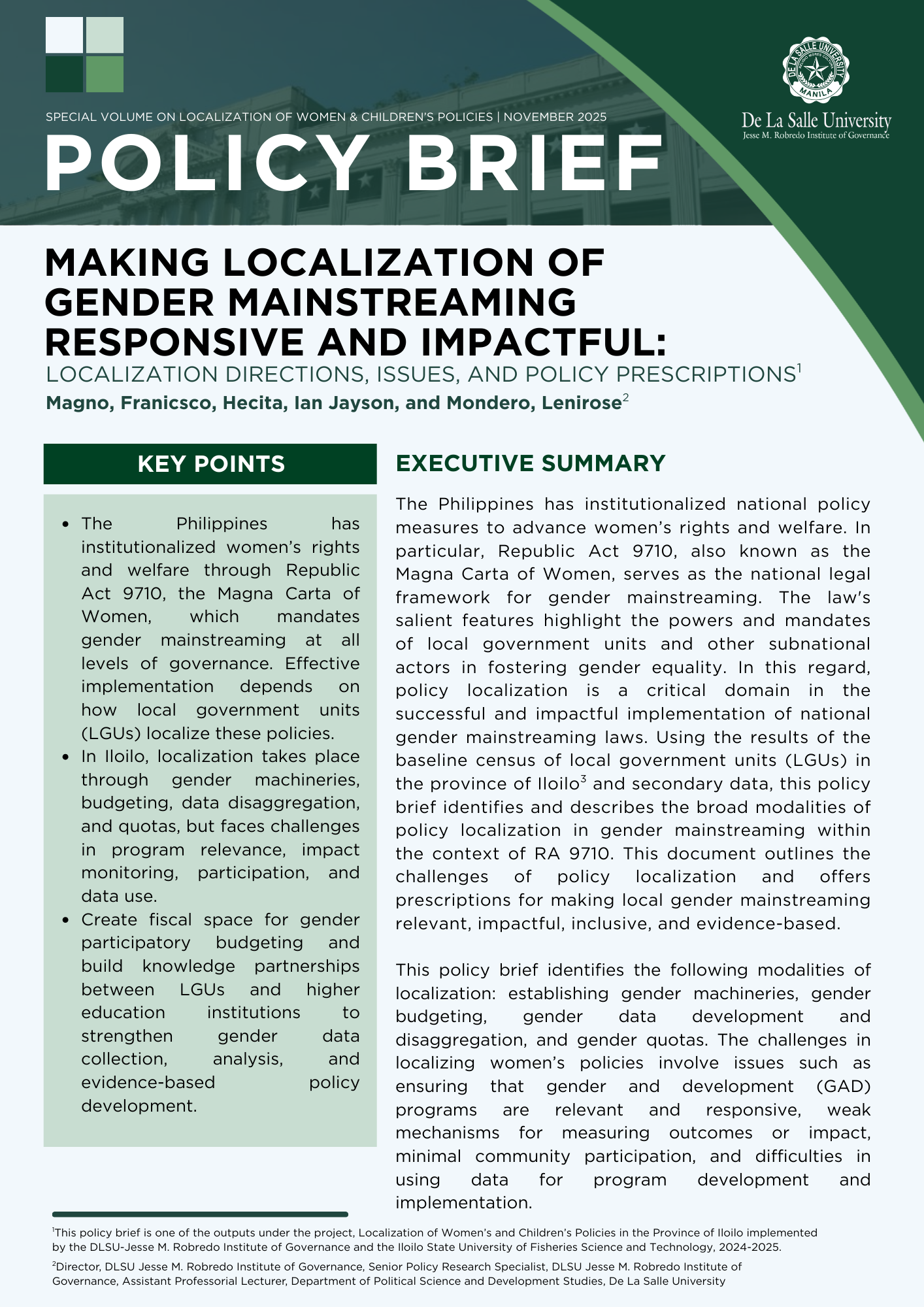
Making Localization of Gender Mainstreaming Responsive and Impactful: Localization Directions, Issues, and Policy Prescriptions
(Special policy brief on women and children)
-
The Philippines has institutionalized national policy measures to advance women’s rights and welfare. In particular, Republic Act 9710, also known as the Magna Carta of Women, serves as the national legal framework for gender mainstreaming. The law's salient features highlight the powers and mandates of local government units and other subnational actors in fostering gender equality. In this regard, policy localization is a critical domain in the successful and impactful implementation of national gender mainstreaming laws. Using the results of the baseline census of local government units (LGUs) in the province of Iloilo and secondary data, this policy brief identifies and describes the broad modalities of policy localization in gender mainstreaming within the context of RA 9710. This document outlines the challenges of policy localization and offers prescriptions for making local gender mainstreaming relevant, impactful, inclusive, and evidence-based. This policy brief identifies the following modalities of localization: establishing gender machineries, gender budgeting, gender data development and disaggregation, and gender quotas. The challenges in localizing women’s policies involve issues such as ensuring that gender and development (GAD) programs are relevant and responsive, weak mechanisms for measuring outcomes or impact, minimal community participation, and difficulties in using data for program development and implementation. To address these challenges, this piece prescribes establishing a fiscal space for gender participatory budgeting and forging knowledge partnerships between LGUs and higher education institutions to improve gender data collection and analysis for policy development. This policy brief aims to contribute to the discussion and limited policy-academic work on the localization of women’s and children’s policies in the Philippines.
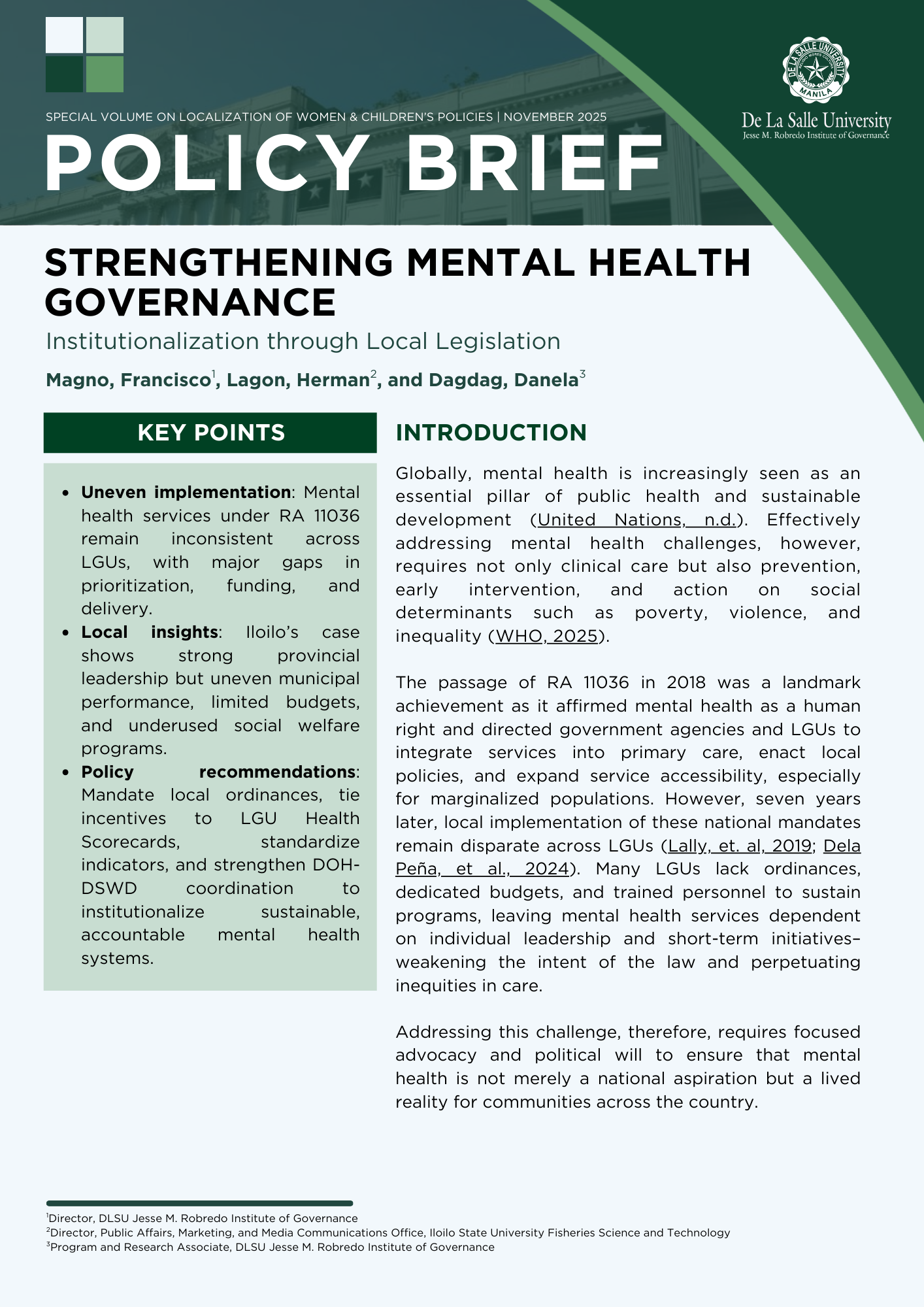
Strengthening Mental Health Governance: Institutionalization through Local Legislation
(SPECIAL POLICY BRIEF ON WOMEN AND CHILDREN)
-
Seven years after the passage of the Philippine Mental Health Act (RA 11036), its enforcement remains uneven across local governments. Wide divergences persist in how LGUs prioritize, fund, and deliver mental health services. This policy brief examines Iloilo Province to understand the local dynamics shaping mental health governance and to propose measures to systematize delivery and strengthen accountability. Iloilo demonstrates strong provincial commitment, yet municipal and barangay implementation varies. Some LGUs offer mental health services despite the absence of formal ordinances while others lack formal services even when their LGUs have passed ordinances. Interviews highlight the essential role of interagency collaboration, the significance of Local Chief Executives, and the need to triage priorities as lean budgets hamper effective and quality service delivery. Social welfare programs were found to complement health services but remain underutilized in addressing the social determinants of mental health.
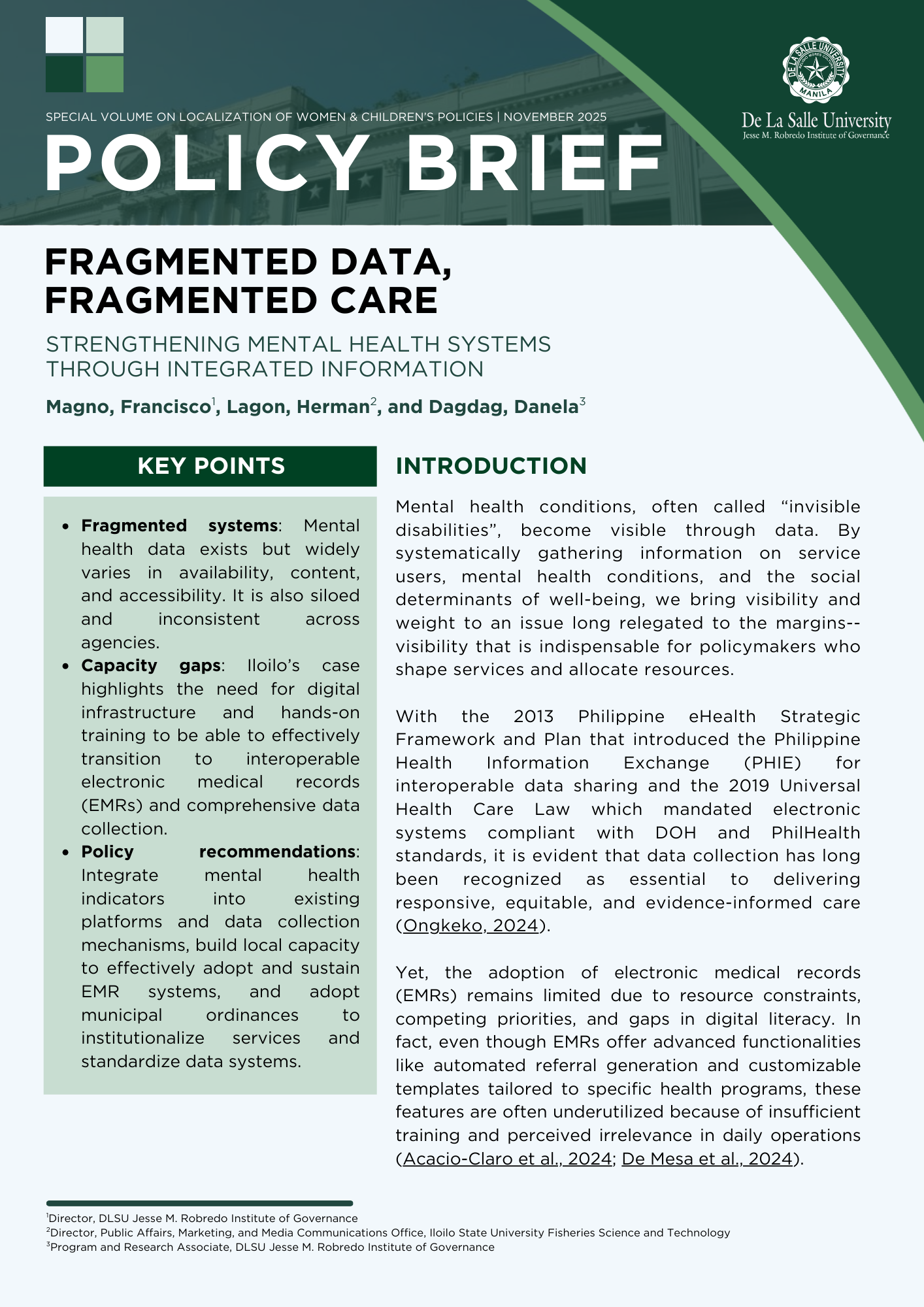
Fragmented Data, Fragmented Care: Strengthening Mental Health Systems through Integrated Information
-
Mental health data exists but widely varies in availability, content, and accessibility. It is also siloed and inconsistent across agencies. Iloilo’s case highlights the need for digital infrastructure and hands-on training to be able to effectively transition to interoperable electronic medical records (EMRs) and comprehensive data collection. With this, the policy brief recommends to Integrate mental health indicators into existing platforms and data collection mechanisms, build local capacity to effectively adopt and sustain EMR systems, and adopt municipal ordinances to institutionalize services and standardize data systems.
Frontline Heroes, Forgotten Rights: Empowering Barangay Health Workers as Frontline Mental Health Champions
-
Baranggay Health Workers (BHWs) are trusted community figures that make mental health services accessible, yet they are constrained by limited training. However, oftentimes, they are faced with challenges of heavy workloads and chronic staffing gaps lead to burnout and reduced service quality. Many remain “volunteers” with delayed or insufficient pay, undermining motivation and sustainability. With this, the policy brief recommends to dedicate mental health focal persons, supervision, and career support programs to protect BHW wellbeing and ensure sustainable, community-based mental health care.
Trusted Frontliners Trained for Impact: Strengthening Mental Health Care through BHW Capacity-Building
-
BHWs serve as trusted first-line responders for mental health concerns yet many lack adequate training, supervision, and support to perform this role effectively. While Iloilo's BHWs are highly trusted and engaged in community consultations, limited refresher training and uneven information cascade hinder consistent service delivery. This policy brief recommends to strengthen LGU-led capacity building through locally adapted modules, establish mechanisms for cascading learnings and refresher courses, and incentive continuous participation and professional growth of BHWs.
Incorporating women and children’s welfare in the curriculum of state universities
(SPECIAL POLICY BRIEF ON WOMEN AND CHILDREN)
-
State universities, in virtue of being funded by the national government, are at the forefront of rights-based education aligned with the Sustainable Development Goals (SDGs). ISUFST, as a newly-converted university, made significant strides in embedding the welfare of women and children in their instruction strategy. Higher education institutions must mainstream women and children's rights across different academic disciplines to bridge their students’ academic pursuits with the advancement of women and children's rights.
Fostering women and children's rights through internationalization of universities in the Philippines
-
Higher education institutions (HEIs) facilitate the advancement of global discourse and advocacy on the rights of women and children through strengthening their global linkages with foreign universities and international organizations. ISUFST’ status as a newly-converted state university posed difficulties in establishing partnerships with prestigious international universities; however, they secured opportunities in the fields of fisheries and aquatic sciences. HEIs can further elevate their partnerships with foreign universities and international organizations by including them in their community-outreach programs.
Strengthening Local Governance through Academic Partnerships: Advancing Women’s and Children’s Rights in the Localization of the SDGs
-
Universities play a pivotal role in advancing regional socioeconomic development and in producing localized knowledge that informs governance and public policy. The baseline survey on the localization of women’s and children’s policies in Iloilo province revealed notable gaps in legislative ordinances for gender and development (GAD). SDG-oriented policy centers within universities must be established to institutionalize their contribution to inclusive, research-based policymaking at the local and regional levels.
Alleviating the unique barriers in tertiary education faced by student-mothers
-
Iloilo State University of Fisheries Science and Technology (ISUFST)’ successful bid to universityhood can facilitate more academic opportunities for marginalized members of the community. Balancing academic and familial responsibilities, mothers enrolled in tertiary education reported entrusting the guardianship of their children within campus grounds. Hence, this policy brief recommends that government subsidies must be provided for childcare assistance, and HEIs must establish child-minding facilities in their campuses.
Advancing women’s and children’s welfare through the Third Mission of State Universities
-
Universities are at the forefront of extending their knowledge beyond the private sector and for the benefit of target marginalized groups. ISUFST underscored the role of women in the fisheries sector and engaged with nonprofit organizations for the promotion of children’s welfare. Hence, this policy brief recommends that HEIs must conduct training to equip their officers with the capacity to conduct community outreach programs concerning the welfare of women and children.
Developing Adolescent Pregnancy Data Systems in a Decentralized Government: Insights from Community Monitoring in Rural Philippines
(special policy brief on women and children)
-
Adolescent pregnancy remains a critical public health and governance concern in the Philippines, where national data systems like those of the PSA face limitations in capturing the full extent of cases. Iloilo Province illustrates how locally driven, community-based monitoring, through its provincial demographic data bank and Barangay Service Point Officers (BSPOs), can complement national systems and enhance reproductive health (RH) governance. The study found inconsistencies in data metrics and system coverage across Iloilo’s local government units (LGUs), with 12 LGUs still lacking a functioning adolescent pregnancy database. Despite these gaps, the province’s experience demonstrates that community-based data collection promotes accountability and helps address weaknesses in national RH monitoring. To strengthen RH data systems, the study calls for (1) standardizing indicators and data collection tools, (2) investing in digitalization and local capacity building, and (3) expanding RH monitoring beyond pregnancy incidence toward a more comprehensive and interconnected system aligned with the RPRH Law’s goals.
SCHOOL-BASED INTERVENTIONS: INSTITUTING ADOLESCENT PREGNANCY PREVENTION in MUNICIPAL TEEN CENTERS
-
Description text goes here
REPRODUCTIVE HEALTH EDUCATION FOR WOMEN OF REPRODUCTIVE AGE: INSTITUTIONAL MECHANISMS FOR SCIENCE COMMUNICATION
-
Description text goes here
ADOLESCENT PREGNANCY PREVENTION: BUILDING RESPONSIVE LOCAL REPRODUcTIVE HEALTHCARE SYSTEMS
-
Description text goes here
Empowering Women in Rural Tourism: Enhancing Local Systems for Inclusive Development
(SPECIAL ISSUE ON WOMEN AND CHILDREN)
-
While tourism holds significant potential to advance women’s economic empowerment, particularly in rural areas where community-based tourism is emerging, women in some localities continue to face barriers to accessing decent work, sustainable income, and adequate support systems. Inter-agency collaboration enabled some success, such as the establishment of weaving centers and livelihood training programs, but individual and structural barriers still constrain them. LGUs should strengthen intersectoral collaboration to connect tourism development with agriculture, food services, education, and MSME support. It is important to expand community-based and flexible capacity-building programs, to invest in gender-responsive infrastructure, and to position women as co-creators in tourism development.
Strength in Numbers: Improving Local Tourism Data Collection Systems
-
Given tourism’s impact in providing direct and indirect employment to millions of Filipino women, it is crucial to monitor tourism-specific labor data to understand this sector’s needs. But presently, tourism employment data in localities is limited in its scope, veiling the status and lived experiences of women formally engaged in the labor-intensive industry. Lapses in collecting and accessing these data also impede the effective formulation of tourism-related policies and programs. As such, this brief offers ways to enhance LGUs’ data collection to properly represent Filipinas in tourism and lay out more employment opportunities.
Shifting towards Gender-sensitive Tourism Infrastructure
-
While the country’s tourism industry has made commitments to be more gender-sensitive, safety risks to women and children persist in tourist areas. Such lapses underscore that local tourism infrastructure– physical, human, and legal– inadequately responds to the needs of women and children. These infrastructures are mostly crafted and established under the mass tourism model, which inhibits genuine sustainable development. As such, this brief recommends concrete strategies to ground the current landscape in being more gender-responsive and child-friendly, whilst offering directions to shift local tourism development towards a more community-based approach.
Enhancing Women’s Participation in Monitoring Gender-Sensitive Tourism Programs
-
Despite the presence of tourism-related training and livelihood programs for women, they are not always adequately included as target beneficiaries. There is an oversight of the needs and social roles that women play in the crafting of tourism policies and programs. To achieve sustainable tourism development, planning, implementation, and evaluation processes of tourism programs must integrate gender perspectives to ensure that local tourism policies and programs are not gender-blind but truly gender-sensitive.

Re-calibrating the Jeepney Modernization Program: Policy Issues and Recommendations
(POLICY BRIEF VOLUME 2 ISSUE 24 - ISSN 2719-0145)
-
The Public Utility Vehicle Modernization Program (PUVMP) aims to modernize the Philippine public transportation system by providing regulations and mechanisms to enhance operational efficiency and environmental sustainability in the transportation sector. The program involves replacing old vehicles with modern technologies, rationalizing routes, and consolidating franchises into cooperatives and corporations. The PUVMP was supposed to have been completed in 2020. However, the COVID-19 pandemic and protests staged by Philippine transport groups in March 2023 have forced the government to postpone the deadline for franchise consolidation to December 31, 2023. This policy brief addresses the PUVMP's design and implementation issues. While the modernization program is necessary, its implementation has experienced challenges such as insufficient program resources, coordination and communication mechanisms between the national government agencies, local governments, and transportation stakeholders, and the lack of inclusive multistakeholder participatory spaces for program planning and implementation. This brief suggests that the government review and recalibrate the program to prioritize easing out the transition; pilot-test the program in smaller areas before pushing for nationwide implementation; enable inclusive multi-stakeholder participation in the program; provide incentives and capacity development to support the transition; and provide the resources and capacity needed to develop for long-term, sustainable performance of the program, keeping in mind that modernization is a long, continuous, and ever-evolving process.

Local Sectoral Representation: Legislation, Implementation, and Recommendations
(POLICY BRIEF VOLUME 2 ISSUE 23 - ISSN 2719-0145)
-
This policy brief aims to foster policy awareness on local sectoral representation - a means to promote the political participation of marginalized sectors as mandated by the 1987 Constitution and the Local Government Code of 1991. Despite its mandate, there has yet to be an enabling law that outlines the election of local sectoral representation, apart from the guidelines issued by the National Commission on Indigenous Peoples for the Indigenous people's mandatory representative in local councils. This policy brief tracks the attempts by Congress to pass an enabling law, the support of agencies such as the Philippine Commission on Women and the Department of Interior and Local Governance, and the few attempts at implementation by individual local government units. The policy brief ends with three different routes policy advocates can take to lobby for implementing local sectoral representation.

Social Media Use and Political Participation in the Philippines
(POLICY BRIEF VOLUME 2 ISSUE 22 - ISSN 2719-0145)
-
This policy brief focuses on the question: What is the effect of social media usage on the political participation of Filipinos? Using data from Wave 5 of the Asian Barometer Survey, the research measures the relationship between social media usage and political participation and the variables of support for democracy, political efficacy, and interest in politics. Hierarchical multiple regression analysis and PROCESS mediation analysis revealed that social media usage positively predicts political participation. The study also finds a positive relationship between political efficacy, political participation, social media and interest in politics. Interest in politics was also revealed to mediate the relationship between social media usage and political participation. The policy brief underscores the need to examine policies on social media usage in the Philippines, given its power to influence political participation and the overall state of democracy in the Philippines.

Fake News among the Youth in the Philippines: The Case of the National Capital Region (NCR)
(POLICY BRIEF VOLUME 2 ISSUE 21 - ISSN 2719-0145)
-
Social media has enabled the youth to access information and participate in social and political processes easier. However, the prevalence of fake news endangers and curtails their informed political participation. This policy brief is based on a survey conducted to measure political values and artificial news consumption among youth in the National Capital Region (NCR). It was found that youths in NCR have relatively strong capabilities in identifying and distinguishing fake news from genuine articles. However, gaps in those capabilities remain, as some respondents identified satirical news as actual news. Therefore, several policy interventions could be considered, including the strengthening of the Philippine education system, especially around the subjects of history, current affairs, and digital literacy, partnerships with civil society, especially youth organizations and social media platforms, on anti-fake news campaigns and programs; the provision of mechanisms to support factcheckers; and a review of the current policy network on fake news.

Digital Resilience as a Sustainable Strategy for Social Enterprise Development in post covid-19 philippines
(POLICY BRIEF VOLUME 2 ISSUE 20 - ISSN 2719-0145)
-
The COVID-19 pandemic has drastically affected various sectors and key players in development, such as the micro, small, and medium enterprises (MSMEs), with social enterprises included. With conglomerates armed with resources to adapt technology solutions, MSMEs had to struggle to survive, especially social enterprises whose bottom lines are not limited to financial but also social and environmental. The absence of a policy that supports the growth of the social enterprise sector limits its ability to address societal and environmental problems. Although social enterprises are considered part of the MSME sector, which allows them to benefit from some of the incentives and programs of national and local government units, the fact remains that the absence of its concept and wording on significant policies and programs limits social enterprises to access appropriate funding and financial support based on their specific needs.
Social enterprises ensure that economic resources are equitably distributed with the community and other stakeholders as partners. This highlights the role of social enterprises that implement entrepreneurial activities for the public interest to achieve social, economic, and environmental goals (OECD, 2018). The overall objective of the social enterprise model is to balance the triple bottom line, namely social, economic, and environmental. Therefore, the efforts of these social enterprises to be socially and economically viable through technology as an enabler are very much consistent with the sector’s objective and that of the United Nations Sustainable Development Goals— this requires a more enabling policy ecosystem.

Better Together: A Survey of the Participation of Business Associations in Philippine voter education
(POLICY BRIEF VOLUME 2 ISSUE 20 - ISSN 2719-0145)

Fence Sitters? A Survey of the Participation of Publicly Listed Companies in Philippine voter education
(POLICY BRIEF VOLUME 2 ISSUE 19 - ISSN 2719-0145)
-
The intent of the UN Sustainability Goals (SDGs) is to provide a “shared blueprint for peace and prosperity for people and the planet, now and into the future”. The 17 listed goals are intended to be achieved in 2030. In 2017, specific targets were identified for each goal, along with indicators to measure and mark progress toward each of these goals. Achieving SDGs requires not only the commitment of the state but also the transformation of these commitments into actual results. This responsibility lies in the hands of those who run the states. This is governance.

An Analysis of the Twitter Discourse in the 2022 Philippine Elections
(POLICY BRIEF VOLUME 2 ISSUE 18 - ISSN 2719-0145)

Political Participation and Gender-Based Violence: Digital Activism and the Safe Spaces Act in the Philippines
(RESEARCH BRIEF - ISSN 2719-0145)
-
The intent of the UN Sustainability Goals (SDGs) is to provide a “shared blueprint for peace and prosperity for people and the planet, now and into the future”. The 17 listed goals are intended to be achieved in 2030. In 2017, specific targets were identified for each goal, along with indicators to measure and mark progress toward each of these goals. Achieving SDGs requires not only the commitment of the state but also the transformation of these commitments into actual results. This responsibility lies in the hands of those who run the states. This is governance.

Sociopsychological Factors Affecting Political Participation
(RESEARCH BRIEF - ISSN 2719-0145)

Misogyny in Politics: A Gendered Fight for the Philippine Presidency 2022
(POLICY BRIEF VOLUME 2 ISSUE 17 - ISSN 2719-0145)

Confronting Anti-Politics Political Intolerance, Socialization, and Additional Considerations for Civic Education
(POLICY BRIEF VOLUME 2 ISSUE 16 - ISSN 2719-0145)
-
To construe politics as a necessary evil - the root of perceived social disharmony - that can be used to end itself in favor of political silence lies at the core of antipolitics. From a psycho-political perspective, anti-political tendencies gravitate around political intolerance and limited socialization; the former keeps citizens fixated on minimizing, if not eliminating, plurality, while the latter keeps them apart. Under anti-political conditions, citizens are bound not by reciprocity and collective life but by an individualistic need to place themselves and others under the overarching principles of acquiescence. Are Filipinos anti-political? This policy brief illustrates that they are generally not, but they have tendencies that might lead to stronger anti-political preferences. Civic education, therefore, also becomes a matter of confronting political intolerance and alleviating socio-political isolation if it is to contribute to democratization in the Philippines.

Enabling PWD Participation in Elections: The Case for the Philippines
(POLICY BRIEF VOLUME 2 ISSUE 15 - ISSN 2719-0145)
-
With the support of civil society organizations and international development partners, the persons with disability (PWD) sector successfully lobbied for the passage of Republic Act No. 10366, otherwise known as the Accessible Polling Places Act of 2013. However, Philippine elections are still impaired, given the complaints about insufficient designated spaces to make it easy for PWDs to vote. In the recent polls, PWD voters had been disenfranchised because election precincts lacked access and volunteers to assist them. The registration process was also cumbersome, leading to PWDs not registering as such and missing out on services dedicated to them, particularly the use of accessible polling places (APPs). This paper, therefore, argues for a significant review and for the Commission on Elections (COMELEC) to improve its implementation of the system. Furthermore, the government and civil society should continuously support these initiatives. It is hoped that political participation among PWDs would be improved as a result.
Election Administration and the 2022 Elections
(POLICY BRIEF VOLUME 2 ISSUE 14 - ISSN 2719-0145)
-
While elections are considered essential to democracy, electoral administration has only recently gained attention in the field of political science. Electoral processes affect electoral outcomes (Calimbahin, 2010); thus, electoral administration could affect democratic foundations, especially in new and developing democracies. Studies have shown that electoral management bodies (EMBs) face autonomy and capacity issues (Lopez-Pintor, 2000; Calimbahin, 2010; Calimbahin, 2021; Erben, Thakur, Jenness,& Smith, 2004; Tancangco, 1997). With global democratic decline as a continuing phenomenon, careful monitoring of electoral management bodies (EMBs) and electoral administration, in general, is important. This policy brief is based on an evaluation of the performance of COMELEC in the 2022 Philippine Specifically, it asks: How did the COMELEC shape the administration of the 2022 election? How did the Commission provide authority as an election management body in order to keep the integrity of the electoral process? And what role did it play to uphold liberal democracy? Consistent with findings from previous elections, results exposed the capacity and autonomy weaknesses of COMELEC as an electoral management body. This was made evident by issues surrounding appointments, deployment of personnel, and performance of electoral management tasks during the election cycle. The problems identified by the study have shown how previous reforms in the commission have failed to address its capacity issues and while there have been improvements, it remains vulnerable to autonomy issues. More substantive reforms are needed including the decoupling of the administration and adjudication functions of the commission and updating of the 1985 Omnibus Election Code (Calimbahin, 2022). Any reform is an uphill battle and will require major and sustained efforts, undertaking such a task is crucial given how valuable effective and competent EMBs can be in contributing to a freer and fairer political environment.

Legislating Electoral Campaign Finance Reform in the Philippines: Examining Lessons from Southeast Asia
(POLICY BRIEF VOLUME 2 ISSUE 13 - ISSN 2719-0145)
-
Equal opportunities for citizens of the Philippines to assume public office through elections are guaranteed by the Constitution, but current campaign finance rules are found flawed and lacking effectively making elections in the country unfair. This paper compares the Philippines’ campaign finance policy with its fellow flawed democracies in Southeast Asia: Thailand, Malaysia, and Indonesia. The comparisons were made through a conceptual framework that accounts for incentives for incumbent parties towards political self-preservation, political actors and institutions, historical precedents and legacies, and recent shocks and scandals.
From the comparisons, the research recommends a clearly defined list of limitations on contributors and donations, a context-sensitive system of expenditure limits, an open system of annual financial disclosure by parties, and an equitable system of subsidies. These reforms, however, would hinge on reforming and strengthening the Commission on Elections (COMELEC) and the institutionalization of political parties in the Philippines. Sustained public scrutiny, emphasis on recent violations as patterns of corruption, and cognizance of the political incentives at play are needed for the reform agenda to succeed.

a content analysis of syllabi in general education courses of higher education institutions (hei’s) in integrating citizen-voters’ education
(POLICY BRIEF VOLUME 2 ISSUE 12 - ISSN 2719-0145)

Towards practical civics: assessments and recommendations for the philippines
(POLICY BRIEF VOLUME 2 ISSUE 11 - ISSN 2719-0145)

Fostering Democratic Citizens: Proposals for a Spectacle of Democratic Life in the PHilippines
(POLICY BRIEF VOLUME 2 ISSUE 10 - ISSN 2719-0145)
-
There is a sheer lack of participation among ordinary citizens in political decision-making outside of elections. Citizens do not deem themselves as capable of effectively participating in politics and for this reason, their participation is more or less exclusive to voting. If democracy is to be construed as a system that is based upon and directed at fostering an active citizenry, then such a condition must be reversed. To break the cycle of disempowerment between elections, civil society organizations (CSOs) and democratically oriented local government leaders must generate demand for political inclusion in the policy process among those who remain outside such activities. This can be achieved through both the expansion of inclusive and effective spaces for participation in the policy process and also through developments in political marketing that can create a spectacle of democratic civic life for those who remain outside it. This should be tied to a network of democratic sister cities/municipalities meant to facilitate the sharing of resources and expertise on participatory-democratic governance. Both can then be subsumed under a general and long overdue program for civic education – untethered from voters’ education – that can shift focus from institutional reform towards citizenship.

Cultivating Democratic Citizenship, Political Views, and Filipino Social Identification in PHilippine Elections and Beyond
(Policy Brief Volume 2 Issue 9 - ISSN 2719-0145)
-
This research explored democratic citizenship, political values, and Filipino social identity in the context of Philippine democracy. Using data gathered from an online questionnaire, 1525 Filipinos eligible to vote in the 2022 elections participated. Results showed that respondents have average scores in terms of democratic citizenship, high endorsement of self-transcendence, low endorsement of globalism as values, and an average Filipino social identity. The research also examined how notions of democratic citizenship, political values, and social identity are associated with the respondent's preference for presidential candidates. These findings highlight the necessity of being informed about how much citizens embody democracy so that more strategic socialization towards the achievement of a full democracy can be planned.

Perceptions of overseas filipino workers on the 2022 philippine national elections
(Policy Brief Volume 2 Issue 8 - ISSN 2719-0145)
-
The Overseas Absentee Voting Act (Republic Act 9189) has allowed Filipinos working and living overseas to participate in the country’s electoral process. While overseas Filipino voters account for a small portion of the voting population, their votes become significant considering the tight political contest among presidential candidates in the May 2022 national elections.
This paper offers policy insights and recommendations on OFWs’ voting preferences based on exploratory online research conducted during the pandemic. The study examines the views of OFWs on the 2022 electoral process, their preferred means of voting, the information sources they access, the qualities they look for in a presidential candidate, and the issues they think should be prioritized by the next presidential incumbent.
Findings show that: (1) the majority of the respondents are interested to vote in the May 2022 elections; (2) most prefer online voting, especially during the pandemic; (3) news, social media, family and friends, and online communities are sources of information that help shape their voting preferences; (4) online Filipino voters favor a presidential candidate who first and foremost is incorruptible and trustworthy; and (5) respondents identified graft and corruption, pandemic response, health, employment, and education as main issues the next administration should address.
It is recommended that policies to ensure the integrity, safety, and convenience of the voting process be prioritized to encourage more overseas Filipino voters to take part in the upcoming elections. Legislation and infrastructure support for online and postal voting should be put in place as these alternative modes of voting are preferred by overseas Filipino voters, especially during the pandemic. Campaigns to promote media literacy are essential to enable OFW voters to make wise decisions in exercising their democratic right to vote.

Safeguarding the Elections: Policy Recommendations in Fighting Disinformation and Misinformation on Social Media Outlets
(Policy Brief Volume 2 Issue 7 - ISSN 2719-0145)
-
This policy brief outlines policy recommendations vital in combating disinformation and misinformation based on the preliminary results of an online survey participated by Filipino Youth residing in the National Capital Region and Calabarzon. The discussion underlines the worsening problem of the proliferation of false information and fake news on various social media platforms as experienced by the respondents in their daily social media use. Offered practical recommendations highlight the importance of a collaborative and liberal approach to safeguard the freedoms enjoyed by citizens as well as our democratic institutions, particularly in the upcoming 2022 National Elections.

Voting Intention of Filipinos amid the Pandemic
(Research Brief - ISSN 2719-0145)
-
This short research note intends to present the preliminary results of a study that aims to document the voting intention of Filipinos during a pandemic.

Securing the Integrity of the 2022 Elections under the New Normal: Best PRactices from the 2020 US, French, South Korean, and Indonesian Elections
(Policy Brief Volume 2 Issue 5 - ISSN 2719-0145)
-
This brief aims to formulate and propose activities, programs, and strategies in securing credible, open, and peaceful 2022 elections in face of the current COVID-19 pandemic. In aid of this endeavor, four (4) electoral experiences in 2020 under pandemic conditions were compared: the United States general elections, the French municipal elections, the South Korean legislative elections, and the Indonesian regional elections. In these experiences, this brief finds the overarching concern of balancing health safety and the democratic process and the possibility of holding elections while in the middle of a pandemic. Seeing the complex nature of the pandemic and the democratic process, this paper proposes a whole-of-nation approach in creating solutions for the challenges of securing the elections during a pandemic. Specific actions proposed here include the emphasis on minimum health safety protocols, the limitation or prohibition of in-person campaigning, collective vigilance against misinformation and abuse of power, the emphasis on online and social media campaigning, and serious push for a reform package to establish contingencies for elections under pandemic and disaster conditions.

Elections in the New Normal: Policy Insights from the Palawan Plebiscite
(Policy Brief Volume 2 Issue 4 - ISSN 2719-0145)
-
This paper intends to offer policy recommendations that our election management body and other electoral stakeholders may reflect on about COVID-proofing the national elections. Moreover, this policy brief, using a whole-of-governance approach, discusses alternatives that consider supply-side and demand-side dimensions with a view that this current health crisis presents an opportunity to pursue lasting reforms that can help make electoral administration not only safer but also more transparent and participatory.

Learning from cuba and the united kingdom: Towards building a universal national health services (NHS) for the Philippines
(Policy Brief Volume 2 Issue 3 - ISSN 2719-0145)
-
This policy brief discusses how the public health system and our national health insurance program currently fall short of helping our citizens afford accessible universal healthcare. In trying to address this, it draws lessons from the cases of Cuba and the United Kingdom and emphasizes the important role of the state by proposing the establishment of a Philippine National Health Services.

Protecting Women and Children during the pandemic: practical advice on integrating inclusive mechanisms in covid-19 strategies of local government units
(Policy Brief Volume 2 Issue 2 - ISSN 2719-0145)
-
Acknowledging the differentiated impacts of the pandemic on vulnerable groups, this policy brief emphasizes the role of local government units (LGU) in advancing inclusive mechanisms to protect women and children. It discusses the risks and challenges specifically experienced by women and children and presents existing measures that the government took at the national and local levels. It also provides practical advice on how LGUs may mainstream women and children protection into their pandemic response strategies.
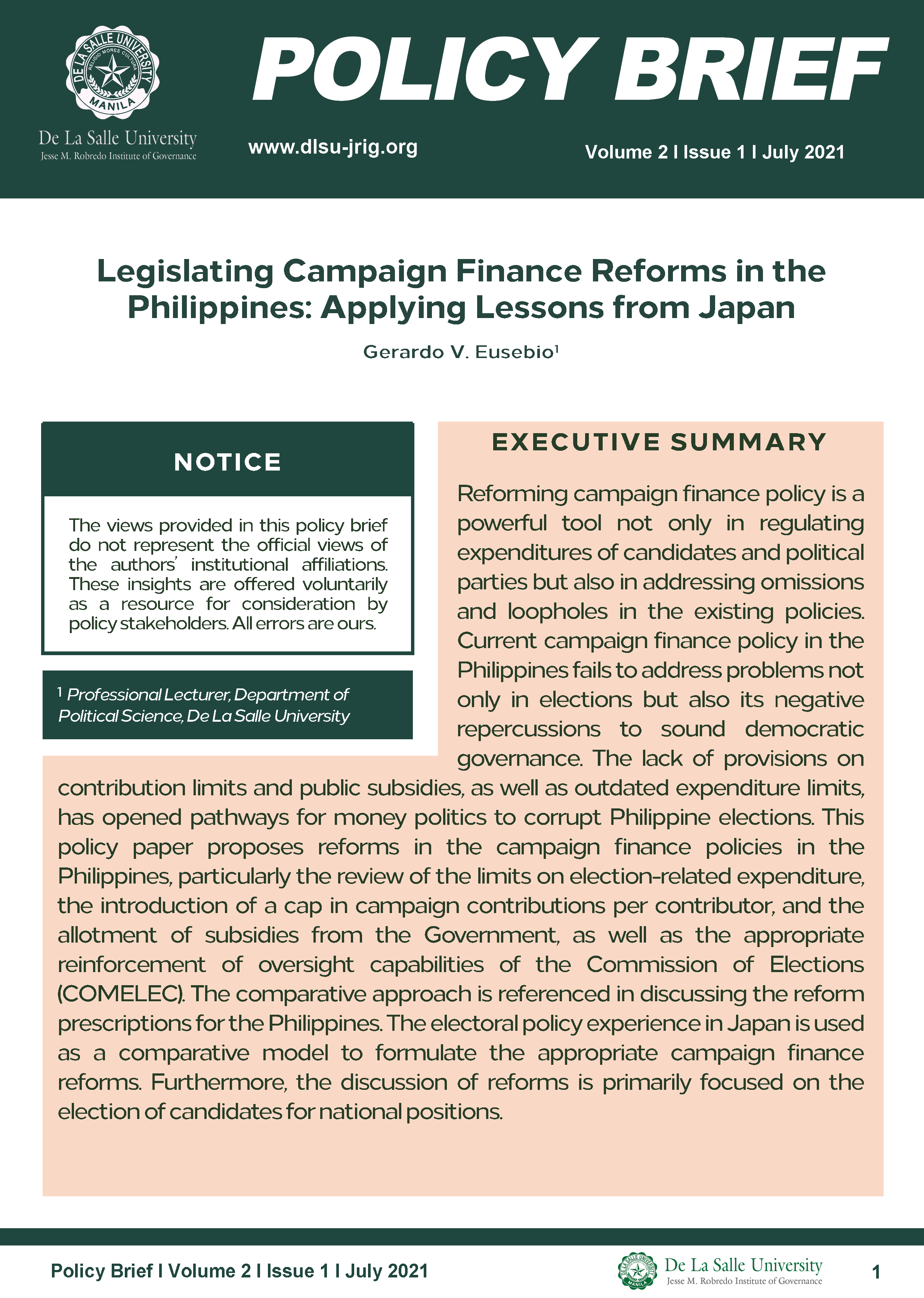
Legislating Campaign Finance Reforms in the Philippines: Applying Lessons from Japan
(POLICY BRIEF VOLUME 2 ISSUE 1 - ISSN 2719-0145)
-
Drawing from the experience of Japan, this policy brief puts forward reforms on campaign finance policies in the Philippines. It specifically emphasizes the importance of putting limits on spending and contribution, as well as providing subsidies to eligible candidates and parties. The brief also highlights the strengthening of the Commission on Elections’ role as a crucial regulatory body in attaining these reforms.

COVID-19 IN THE PHILIPPINES: EXPANDING THE ROLE AND CAPABILITIES OF THE PHILIPPINE COAST GUARD AND THE PHILIPPINE NATIONAL POLICE
(POLICY BRIEF VOLUME 1 ISSUE 9 - ISSN 2719-0145)
-
The ninth issue of our policy brief discusses the role of law enforcement and public safety agencies such as the Philippine National Police (PNP) and the Philippine Coast Guard (PCG) in the government’s COVID-19 response. In a time when a global health crisis threatens public safety along with public health, the brief reexamines their mandate and their organization and proposes alternatives in strengthening their technical capabilities as well as the relations within their units and respective communities.

Strengthening provincial supply chain management capacity for covid-19 vaccines
(POLICY BRIEF VOLUME 1 ISSUE 8 - ISSN 2719-0145)
-
This eighth issue of our policy brief examines the supply chain management (SCM) practices of three Philippine provinces. It assessed the different aspects of their vaccine SCM, from management up to their delivery. Based on the assessment, the paper outlines insights and recommendations on coming up with a coherent strategy to ensure the efficient administration and delivery of vaccines in the country.

setting up a covid-19 mental health response strategy among local government units
(policy brief VOLUME 1 ISSUE 7 - ISSN 2719-0145)
-
The seventh issue of our policy brief emphasizes the need to respond to the mental health issues of the public amidst the COVID-19 pandemic. It presents the measures taken by the national and local government as well as private entities in addressing problems in mental health, which virtually have become a pandemic as well. At the end, it expounds on some recommendations specific for the local government units in further strengthening their strategies and approaches.

digital transformation and covid-19: policy imperatives for local governments and msmes in the Philippines
(POLICY BRIEF VOLUME 1 ISSUE 6 - ISSN 2719-0145)
-
The sixth issue of our policy brief discusses how digital transformation (Dx) strategies can provide new ways of energizing the country’s supply chain and customer relationship management to address the fallout arising from the COVID-19 pandemic. Likewise, it discusses how Dx can improve public services through online systems that will encourage citizens and businesses to transact with the government within the safety of their homes. Finally, this policy brief proposes a Dx roadmap for local policymakers, local government executives, and entrepreneurs with a new perspective on how to use Dx to create stronger integration of local governments and Micro, Small, Medium-scale Enterprises (MSMEs).

reintegrating overseas Filipino workers amidst the covid-19 pandemic
(POLICY BRIEF VOLUME 1 ISSUE 5 - ISSN 2719-0145)
-
The fifth issue of our policy brief discusses the Philippine government’s response to the plight of returning Overseas Filipino Workers in light of the COVID-19 pandemic. It discusses some of the measures the national government took to address the needs of returning OFWs due to the pandemic. As well, it discusses how different stakeholders can play a role in potential areas for policy intervention. Finally, it explores possible long-term solutions needed to reintegrate OFWs displaced by this global health crisis.

covid-19 in the Philippines: potential implications in modernizing the armed forces of the Philippines
(POLICY BRIEF VOLUME 1 ISSUE 4 - ISSN 2719-0145)
-
The fourth issue of our policy brief underscores the need for the Philippines to reexamine its national security agenda and review the new AFP modernization program (AFPMP) in line with its current experiences related to the COVID 19 pandemic and the “new normal.” This entails a reevaluation of the current AFP philosophy on military operations other than war (MOOTW), its impact on Humanitarian Assistance and Disaster Relief (HADR) readiness, and its obvious link to chemical, biological, radiological and nuclear (CBRN) defense principles.

setting up a health communication strategy for local government units during the covid-19 pandemic: insgihts and recommendations
(POLICY BRIEF VOLUME 1 ISSUE 3 - ISSN 2719-0145)
-
The third issue of our policy brief outlines some suggestions in establishing an effective health communication strategy for Philippine local government units (LGUs) in response to Covid-19. Effective risk and health communication plays a crucial role and gives an opportunity to help their constituents understand and adopt protective behaviors during a health emergency such as a pandemic.

setting up a covid-19 community response strategy in localg government units: immediate, transitory, and medium-term considerations for planning
(POLICY BRIEF VOLUME 1 ISSUE 2 - ISSN 2719-0145)
-
The second issue of our policy brief outlines some policy considerations for local government units (LGU), specifically provinces, cities, and municipalities, currently drafting or revisiting their Covid-19 Community Response Strategy and the accompanying local measures. It integrates some of the lessons from innovative practices, observations, and inputs from our volunteer group of professionals in order to aid LGU officials currently planning, drafting and updating their Covid-19 strategy.
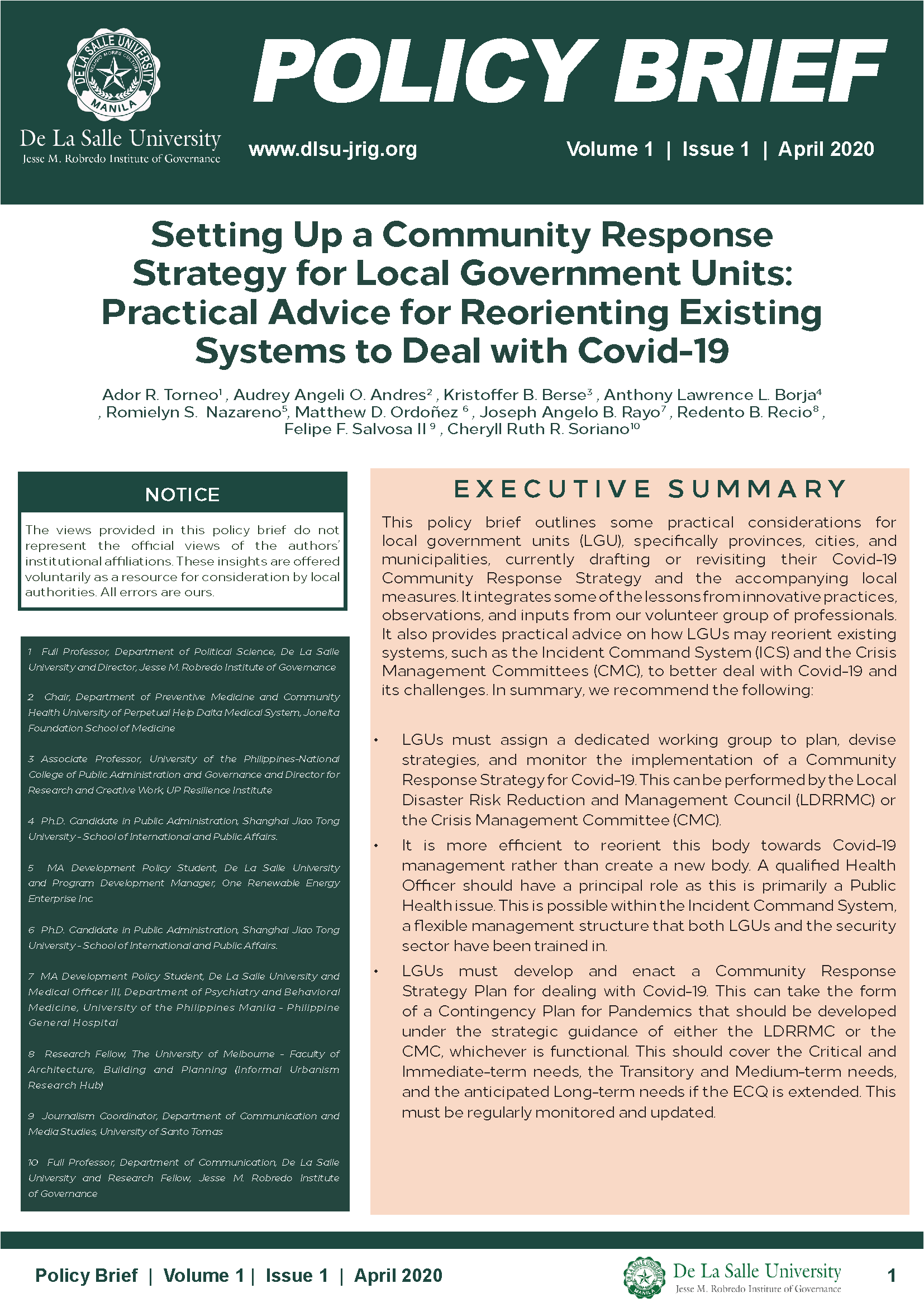
setting up a community response strategy for local government units: practical advice for reorienting existing systems to deal with covid-19
(POLICY BRIEF VOLUME 1 ISSUE 1 - ISSN 2719-0145)
-
The first issue of our policy brief outlines practical considerations for local government units (LGU), specifically provinces, cities, and municipalities, currently drafting or revisiting their Covid-19 Community Response Strategy and local measures. It integrates lessons from innovative practices, observations, and inputs from our volunteer group of professionals. It also provides practical advice on how LGUs may reorient existing systems, such as the Incident Command System (ICS) and the Crisis Management Committees (CMC), to better deal with Covid-19 and its challenges.